
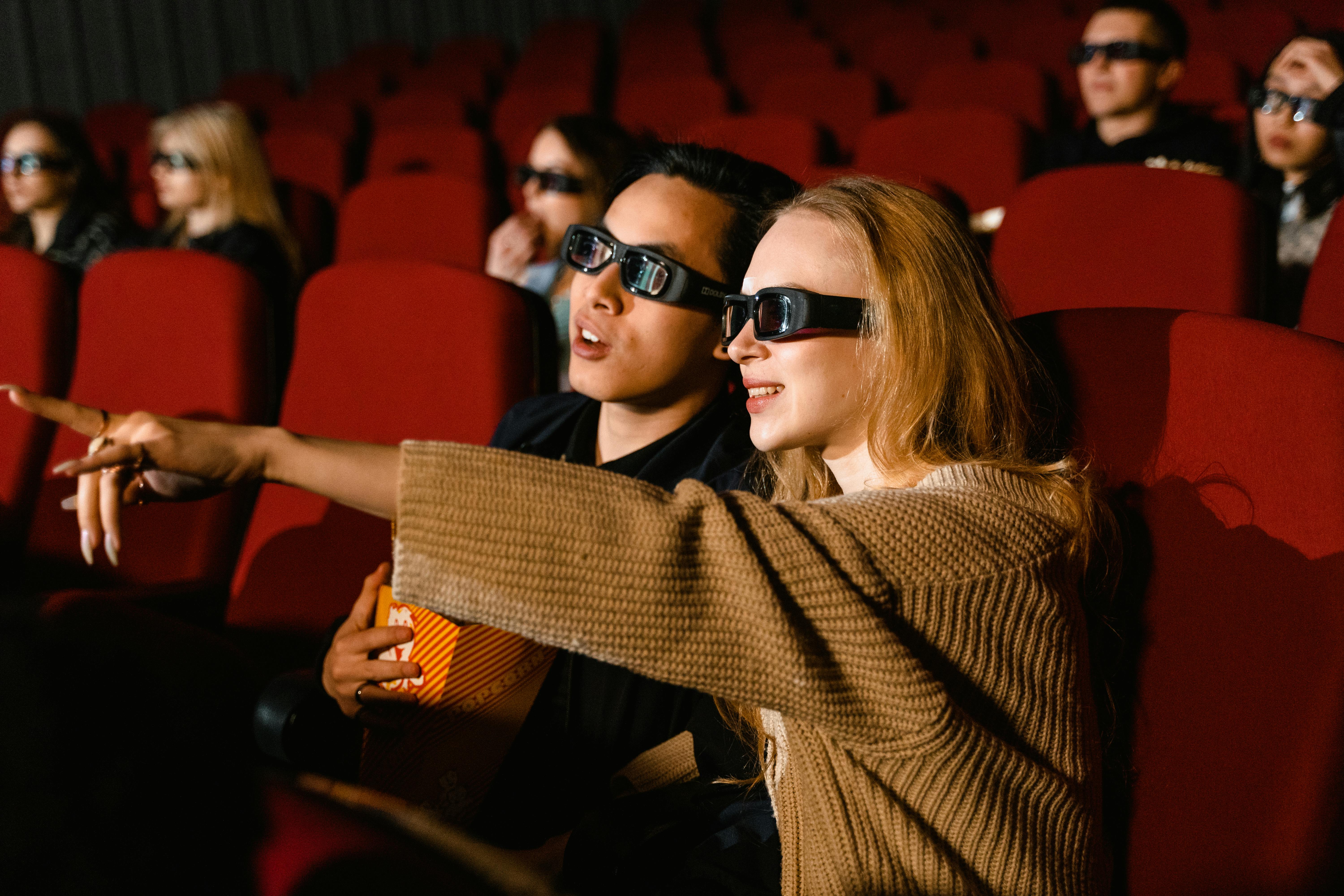
Dive deep into the future of film! In 2026, Virtual Reality (VR), Augmented Reality (AR), and Mixed Reality (XR) are redefining cinematic experiences. Discover the top VR headsets, AR glasses, and immersive platforms transforming how you watch movies, compare premium subscriptions, and find the perfect gear to buy for unparalleled digital entertainment and spatial computing. Get ready to upgrade your home theater!
Introduction to the Topic
Remember the thrill of your first widescreen TV? Or the leap to 4K? Prepare for a seismic shift far greater. In 2026, traditional flat-screen cinema is increasingly sharing the spotlight with a revolutionary new frontier: XR Cinema. This isn't just about watching a movie; it's about stepping inside it, becoming a part of the narrative, and experiencing stories with unprecedented depth and immersion. From the comfort of your living room, you can now traverse alien landscapes, witness historical events firsthand, or navigate interactive narratives where your choices truly matter. The convergence of Virtual Reality (VR), Augmented Reality (AR), and Mixed Reality (MR) – collectively known as Extended Reality (XR) – is no longer a niche technology. It's the burgeoning mainstream, offering a diverse array of cinematic experiences that promise to redefine what 'watching a movie' truly means. If you're looking to elevate your entertainment, upgrade your home setup, or simply explore the bleeding edge of digital storytelling, this comprehensive guide will walk you through everything you need to know to buy into the future of film.
Backgrounds & Facts
The seeds of immersive cinema were sown decades ago with rudimentary VR experiments, but it's only in the mid-2020s that the technology has matured enough for widespread adoption. Gone are the days of clunky, low-resolution headsets. Today's XR devices boast stunning 8K-per-eye resolutions, ultra-wide fields of view, and advanced spatial audio that makes every whisper and explosion feel incredibly real. Haptic feedback suits, once relegated to sci-fi, are now becoming commercially viable accessories, adding a tactile dimension to virtual worlds. Major players like Meta, Apple, Pico, and XREAL have poured billions into research and development, leading to lighter, more comfortable headsets and sleeker AR glasses that seamlessly blend digital content with your physical environment. This technological leap has catalyzed a new wave of filmmakers and content creators specializing in 360-degree narratives, volumetric capture, and interactive storytelling. Platforms like 'CineVR+,' 'Spatial Flix,' and 'XR Prime Video' are emerging as the new streaming giants, offering exclusive libraries of immersive films, documentaries, and interactive series. Unlike traditional film, XR cinema often places the viewer at the center of the action, allowing them to look around, explore, and sometimes even influence the story's progression. This shift from passive observer to active participant is not just a gimmick; it's a fundamental change in how stories are conceived and consumed, offering unparalleled levels of engagement and emotional resonance. The industry is booming, with analyst firms projecting the XR entertainment market to exceed $200 billion by the end of the decade, driven by consumer demand for novel and engaging digital experiences.
Expert Opinion / Analysis
'We're moving beyond the frame,' asserts Dr. Anya Sharma, a leading futurist and media anthropologist at the Institute for Digital Storytelling. 'For centuries, cinema has been constrained by the rectangle. XR shatters that limitation, offering an infinite canvas. The challenge, and the immense opportunity, lies in teaching filmmakers to think spatially, to guide the viewer's gaze, and to design narratives that thrive on presence and agency.' Dr. Sharma highlights the psychological impact of XR cinema. 'When you're truly inside a story, the empathy, the fear, the joy – it's all amplified. This creates a powerful connection, but also demands a new level of ethical consideration from creators, especially regarding intense or disturbing content.'
However, the path to mainstream adoption isn't without its hurdles. 'Cost remains a barrier for premium hardware, and content discovery can be fragmented,' notes tech analyst Mark Chen from 'Digital Horizons.' 'While motion sickness has largely been mitigated by higher refresh rates and better optics, it's still a concern for some new users. But these are solvable problems. The industry is rapidly innovating, and we're seeing more accessible entry points, along with a growing library of experiences that cater to diverse tastes.' Chen emphasizes the importance of 'comfort and convenience' for mass appeal. 'People want to easily put on a device and dive into a movie, just like they pick up a remote. The next generation of XR devices is focusing heavily on that seamless, user-friendly experience.' The consensus among experts is clear: XR cinema is not a fleeting trend but a foundational shift, demanding new creative tools, distribution models, and, crucially, a new way for audiences to engage with stories.
💰 Best Options in Comparison (VERY IMPORTANT)
Ready to upgrade your home entertainment to the next dimension? Navigating the burgeoning XR cinema market in 2026 can feel daunting with so many incredible options for hardware and content platforms. Whether you're a casual viewer looking for an enhanced movie night or a dedicated cinephile seeking the ultimate immersive experience, we’ve broken down the best gear and services available right now to help you make an informed purchasing decision. From premium headsets to versatile AR glasses and the essential streaming subscriptions, here are our top picks to buy for the ultimate XR cinematic journey.
-
Meta Quest Pro 2: The Professional's Choice for Pure VR Immersion
Building on its groundbreaking predecessor, the Quest Pro 2 (estimated price: $1,499) boasts stunning 8K resolution, advanced eye-tracking for foveated rendering, and a wider field of view, delivering unparalleled visual fidelity for cinematic VR. Its open-design form factor offers a comfortable fit for extended viewing sessions, while integrated spatial audio provides a truly enveloping soundstage. Perfect for dedicated VR movie watching and high-fidelity interactive experiences, it also features robust mixed reality passthrough, allowing you to blend your real environment with virtual screens. Ideal for users seeking a premium, untethered VR cinema experience with access to an extensive content library from the Meta Quest Store and third-party apps like CineVR+.
-
Apple Vision Pro 2: Seamless Spatial Computing for AR/MR Films
Apple's second-generation Vision Pro 2 (estimated price: $3,299) refines the concept of spatial computing, offering a seamless blend of augmented and mixed reality for cinematic experiences. With incredibly high-resolution micro-OLED displays, advanced hand and eye tracking, and a powerful M3 chip, it excels at overlaying massive virtual screens onto your physical space or delivering breathtaking AR films that interact with your environment. While pricier, its integration with the Apple ecosystem, intuitive visionOS, and access to exclusive content on Apple Immersive Video and compatible streaming apps make it the ultimate choice for users prioritizing a premium, integrated AR/MR cinematic experience with productivity potential. Best for those ready to invest in the cutting edge of mixed reality entertainment.
-
Pico 5 Pro: The Value King for Cinematic VR Enthusiasts
The Pico 5 Pro (estimated price: $699) continues Pico's tradition of offering high-performance VR at a competitive price point. Featuring excellent 4K-per-eye resolution, a comfortable design, and inside-out tracking, it delivers a fantastic untethered VR movie-watching experience. Its robust content platform provides access to a growing library of 360-degree films and interactive narratives. While it may not have the mixed reality prowess of the Vision Pro 2 or the absolute resolution of the Quest Pro 2, the Pico 5 Pro is an outstanding choice for budget-conscious consumers who want a dedicated, high-quality VR cinema device without breaking the bank. It's a superb entry point into premium VR film viewing.
-
XREAL Air 3: Portable AR Glasses for On-the-Go Big Screens
For those prioritizing portability and discreet AR film viewing, the XREAL Air 3 (estimated price: $449) is a game-changer. These lightweight AR glasses project a massive virtual screen (up to 330 inches) directly into your field of view, allowing you to watch movies from your phone, laptop, or compatible streaming stick anywhere. While not full VR, they offer a personal, big-screen experience for traditional 2D films and some AR content, perfect for flights, commutes, or simply enjoying a private cinematic moment. They connect via USB-C and are incredibly easy to use, making them an excellent complementary device for anyone who wants a portable, large-screen viewing solution without the bulk of a VR headset. Ideal for travelers and casual AR film viewers.
-
CineVR+ & Spatial Flix: Premium Immersive Content Platforms
Hardware is only half the equation; content is king. CineVR+ (Subscription: $19.99/month or $199/year) is the leading premium platform for exclusive cinematic VR and interactive narratives, offering a curated library of high-budget productions and award-winning immersive films. For a broader range, Spatial Flix (Subscription: $14.99/month or $149/year) provides a vast collection of 360-degree documentaries, concert experiences, and user-generated immersive content, along with a growing selection of AR films. Both offer free trials, allowing you to explore their unique offerings before committing. Investing in these subscriptions is crucial for unlocking the full potential of your new XR cinema gear.
Here’s a comparative table to help you decide which XR cinema solution best fits your needs and budget:
| Feature | Meta Quest Pro 2 | Apple Vision Pro 2 | Pico 5 Pro | XREAL Air 3 | CineVR+ / Spatial Flix |
|---|---|---|---|---|---|
| Type | Standalone VR/MR Headset | Spatial Computer (AR/MR) | Standalone VR Headset | Portable AR Glasses | Content Platforms |
| Estimated Price (2026) | $1,499 | $3,299 | $699 | $449 | $15-$20/month |
| Resolution (per eye) | ~8K (foveated) | ~4K Micro-OLED | ~4K | "330-inch virtual screen" | N/A (Content Quality) |
| Key Features | Advanced MR passthrough, eye/face tracking, premium optics, extensive app store | Intuitive visionOS, seamless Apple ecosystem integration, stunning visual clarity, spatial audio | Comfortable design, great value, strong VR content ecosystem, untethered freedom | Lightweight, portable, plug-and-play, large virtual screen, discreet viewing | Exclusive immersive films, 360° documentaries, interactive narratives, regular new releases |
| Best For | Dedicated VR cinema, high-fidelity interactive experiences, professional use | Premium AR/MR films, integrated Apple users, spatial computing pioneers | Budget-conscious VR cinephiles, accessible premium VR film viewing | On-the-go big-screen viewing, casual AR, complementing existing devices | Accessing the latest and greatest immersive film content |
| Content Library | Meta Quest Store, PCVR, compatible apps | Apple Immersive Video, App Store, compatible streaming services | Pico Store, compatible apps | Device-dependent (e.g., phone, laptop, streaming stick) | Extensive (CineVR+ focused on premium, Spatial Flix broader) |
Outlook & Trends
Looking ahead, the future of XR cinema in 2026 and beyond promises even more mind-bending possibilities. We're on the cusp of AI-driven adaptive narratives, where storylines and character interactions could dynamically change based on your gaze, emotional responses, or even biometric data, creating truly personalized cinematic journeys. Imagine a horror film that knows exactly what scares you, or a drama that subtly shifts its focus to the characters you connect with most. Social XR experiences are also set to explode, allowing you to 'attend' virtual movie premieres with friends from around the globe, sharing the immersive experience in a shared virtual space, complete with real-time reactions and avatars. The lines between gaming, film, and live events will continue to blur, with interactive experiences becoming more sophisticated and widely available. Dedicated 'XR Cinemas' – physical venues equipped with advanced haptic chairs, multi-sensory effects, and high-fidelity VR booths – are expected to become boutique attractions, offering premium, collective immersive experiences beyond what's possible at home. Furthermore, advancements in brain-computer interfaces (BCI), while still nascent, hint at a distant future where direct neural input could offer unparalleled levels of immersion, potentially making headsets obsolete. The industry is also keenly focused on making XR content creation more accessible, empowering a new generation of filmmakers to tell stories in this revolutionary medium. The journey has just begun, and the landscape of digital entertainment is poised for continuous, breathtaking evolution.
Conclusion
The era of XR Cinema is not merely a technological upgrade; it's a paradigm shift in how we engage with stories. From the high-fidelity virtual worlds of the Meta Quest Pro 2 and Pico 5 Pro to the seamless mixed reality of the Apple Vision Pro 2 and the portable big screen of the XREAL Air 3, there's an immersive experience waiting for every budget and preference. Coupled with rich content libraries from platforms like CineVR+ and Spatial Flix, the future of film is literally at your fingertips – and all around you. Whether you're comparing the best VR headsets, looking to buy premium AR glasses, or simply seeking to upgrade your entertainment, 2026 offers an unprecedented opportunity to dive into cinematic experiences that were once the stuff of science fiction. Don't just watch the future of film; step into it. Explore the options, pick your gear, subscribe to the platforms, and prepare to be utterly transported. Your next movie night will never be the same.